
Meshtastic Protocol
ISM Band and RF Overview
Section titled “ISM Band and RF Overview”In North America, Meshtastic operates in the unlicensed 915 MHz ISM band. LoRa modulation enables long-range communication at very low power levels by trading data rate for sensitivity and range. Payload sizes are typically limited to 256 bytes per message.
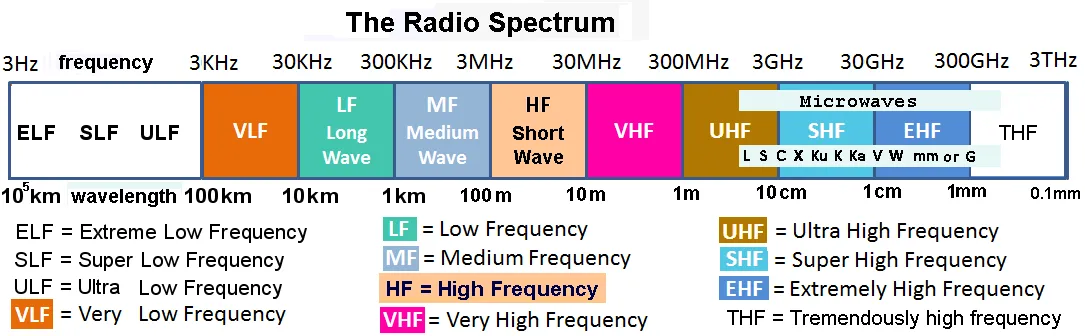
The maximum permitted effective isotropic radiated power (EIRP) in this band is +30 dBm (1 W PEP), or +36 dBm EIRP when accounting for antenna gain. Operating outside of these limits is strictly prohibited by the FCC.
Meshtastic supports multiple radio presets, ranging from short-range, high-bandwidth modes to long-range, low-bandwidth configurations. The most commonly used open-channel preset is Long / Fast (1.07 kbps, 250 kHz), which balances throughput and coverage and is the default configuration.
Network
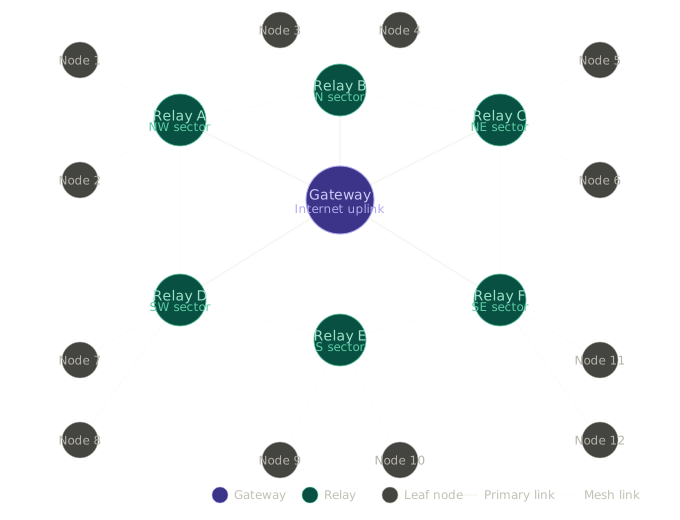
Section titled “Network”Nodes form a self-healing mesh network by rebroadcasting messages. A configurable hop limit controls how many times a packet may be relayed, allowing the network to scale while limiting congestion and signal degradation.
Encryption
Section titled “Encryption”Channels such as LongFast are encrypted using AES-256 (CTR mode) with a pre-shared channel key. Direct messages use public/private key pairs for end-to-end encryption. Messages are cryptographically signed, allowing recipients to verify the sender’s identity. Packet headers remain unencrypted to support routing and rebroadcasting.
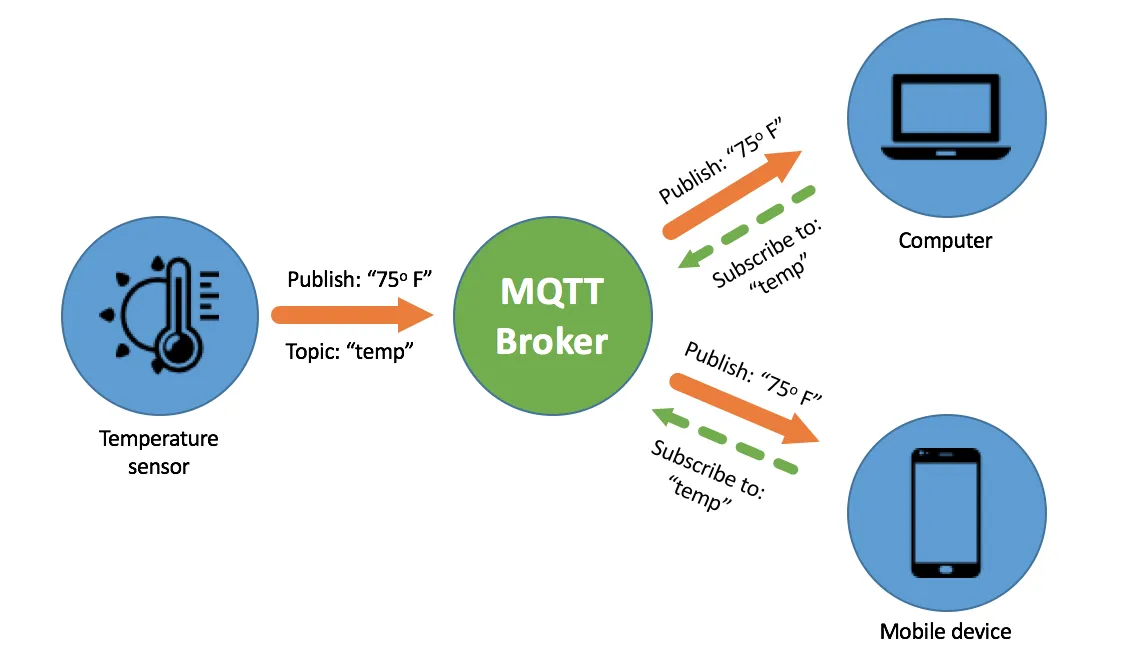
Optionally, Meshtastic supports MQTT bridging – a lightweight publish-subscribe machine-to-machine networking protocol, which tunnels mesh traffic over the internet. This allows geographically separated mesh networks to interconnect, at the cost of relying on grid infrastructure.
Built with the help of Claude. All content is written and reviewed by club members.
Auburn University Mesh Club ·Source on GitHub